
Find Linn County Residents
The best first source depends on the fact already known. A street address belongs in an assessor search. A name and ZIP can verify a voter registration. A party name can lead into the Iowa Courts docket or Recorder index. For a Cedar Rapids resident from an earlier decade, a city directory may be more useful than any current roll. The Linn County residents directory is therefore a route through named custodians, not a single government list.
Keep the role and date beside every name. An assessor identifies a parcel owner, not every occupant. A deed names parties to a transaction. A voter lookup confirms a registration and polling information from the entered name and ZIP. A directory places a listed person at a dated address. A second source should support any conclusion about identity or place.
- Write down the full name, complete address, phone number, ZIP, and time period that are already known.
- Choose the county assessor or the separate Cedar Rapids assessor, then save the parcel number and situs address.
- Use the voter, court, or recorder index that matches the fact to be checked.
- For an older trail, search Cedar Rapids directories and newspapers by year, then confirm the scanned page.
- When no portal covers the record, contact the custodian by phone, mail, email, counter visit, or a narrow chapter 22 request.
Start narrow. Add a middle name, date band, parcel identifier, or case county only after the first result set shows what the system accepts. That habit reduces same-name errors and keeps the search tied to Linn County.
Linn County Court Index Levels
The Iowa Courts Electronic Docket Record Search is a public party index, not the full case file. Search controls include trial court and county, case type, case number, citation, party name, role, attorney, date range, and status. A result may show case number, title, type, county, status, parties, filings, events, and disposition where public.
The official docket search capture marks the statewide route.
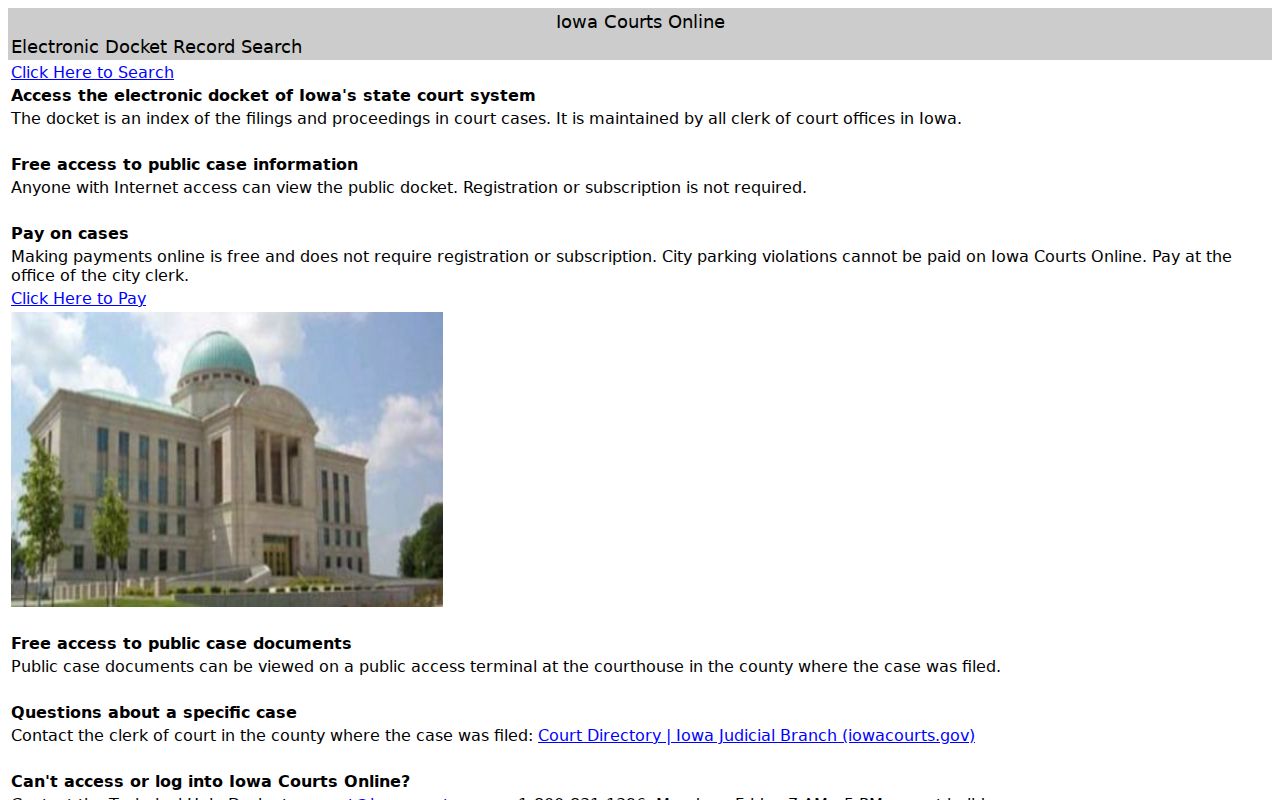
Public courthouse terminals can provide more document access than the free web index, while subscription access is a third level. Call the Linn County Clerk of Court at 319-398-3411 for certified copies, older paper files, or access questions. Sealed, juvenile, and other confidential matters remain unavailable. Federal cases use PACER or Northern District courthouse terminals.
Linn County Vital Record Gates
The Linn County Recorder and Iowa HHS Vital Records divide custody by record type and date. Current certified copies are entitlement-based. Applicants need the required relationship, identification, and, for mail routes, the stated notarization and form steps. The state fee is $20 per certified copy as of July 1, 2026.
That fee change matters because the county page still contained an older $15 amount in its body while displaying the newer notice. Confirm price and eligibility before sending payment. State archival rules open birth, marriage, and divorce records at 75 years and death or fetal-death records at 50 years when held by the state archivist, but those ages do not make every current county certificate public.
Apply online through the authorized state route where eligible, or use the county or HHS counter and mail channels. A genealogy request may instead belong with the State Historical Society, FamilySearch catalog, or a historical index.
Linn County Role Searches
Some official searches connect a person to a public role rather than a home. The Iowa Business Entities Search can show an entity name, status, registered agent, officers, filings, and addresses. The professional-license search filters by board, name, city, state, ZIP, status, and license number. Iowa's UCC search can find a named debtor or secured filing party.
These sources help distinguish two people with the same name, verify a seller's claimed business, or locate a contact in an estate matter. They do not prove residence. Save the entity or license number and status date, then compare only the public facts needed for the question.
Request Missing Linn County Records
Iowa Code chapter 22, Examination of Public Records, allows examination and copying of nonexempt public records. No magic form is required. Name the custodian, identify the person, address, record type, and date band, state whether inspection or an electronic copy is preferred, and ask for a fee estimate.
Use the office's normal channel first. Recorder requests can go by counter, phone, mail, or drop box. Elections list orders can go by mail, fax, or email. GIS supplies public map data and staff help. The Sheriff uses an open-records request for reports and local custody material because no official online Linn County jail roster was found.
The captured Sheriff open-records page shows the honest fallback when a roster is absent.
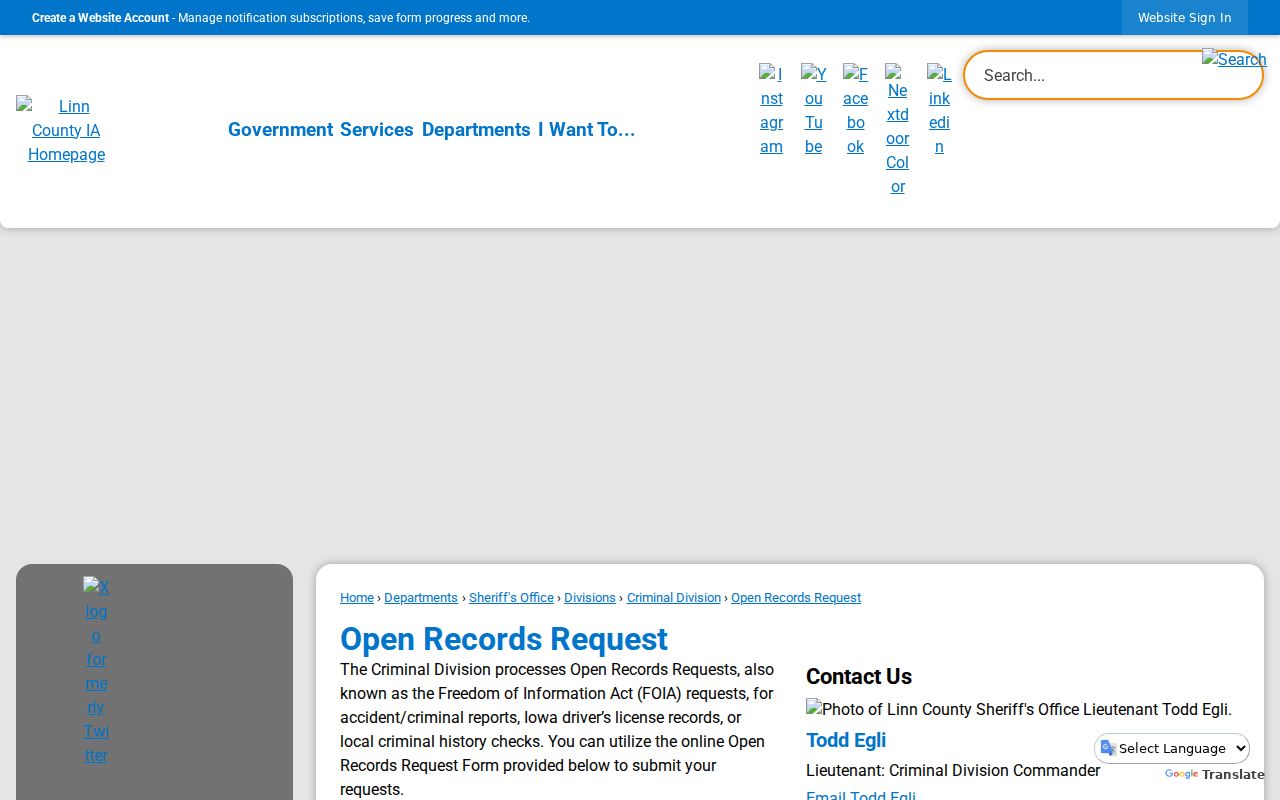
A custodian may charge reasonable production costs, request advance payment for a material estimate, or redact confidential fields. Ask for the public portion and the legal basis if anything is withheld.
Iowa Privacy Stops Directory Searches
Not every address belongs in a public-facing result. Iowa Safe at Home gives eligible survivors a substitute address, mail forwarding, and confidential voter and absentee-voting services. Vital records, juvenile matters, sealed court files, driver data, and protected identifiers have separate restrictions. A blank result can therefore reflect law or safety, not a failed search.
The official Safe at Home page explains the state confidentiality program.

Respect the boundary. Do not try to reconstruct a protected address from unrelated rolls. When a record is needed for a lawful estate, family, or court purpose, use the authorized custodian process instead of piecing together public fragments.
May's Island Record Geography
Linn County's civic center changed over time. Marion was the first county seat. A long contest ended with the 1919 vote favoring Cedar Rapids, and Cedar Rapids deeded part of May's Island for the courthouse site. An early land or court reference may therefore point to Marion even when later material is kept or described through Cedar Rapids.
The record trail also changed by office. The Auditor office was created in 1870, while earlier county duties were divided among a county judge and clerk. County vital custody moved from district court clerks to recorders in 1997. Searching the former custodian name, record series, and year can rescue a query that fails under today's office label.
In 2008, the Cedar River flood displaced county and city operations and destroyed some Northern District federal courthouse files. Missing material from that period calls for a clerk or archive inquiry, not an assumption that the record never existed.
Linn County Directory Offices
The Jean Oxley Linn County Public Service Center brings the Recorder, Assessor, Auditor and Elections, Treasurer, and related county services to 935 2nd Street SW in Cedar Rapids. Each counter has a different record duty. Call the department, not merely the building, before a visit. Cedar Rapids parcels also require the city assessor rather than the county assessor. The Linn County street directory gives the full address-first route.
Linn County Recorder
935 2nd Street SW
Cedar Rapids, IA 52404
319-892-5420
Linn County Elections
935 2nd Street SW
Cedar Rapids, IA 52404
319-892-5300
Split Linn County Property Search
Property research begins with jurisdiction. Linn County includes 18 incorporated cities, but the county Assessor does not assess Cedar Rapids. Use the Linn County Assessor search for county-assessed parcels and the Cedar Rapids Assessor search for city parcels. The inspected county form had no direct owner-name field, so begin with land rather than a person.
| Portal field | Input | Use in a directory search |
|---|---|---|
| PIN | Exact or wildcard parcel number | Return to a known property |
| Address | House number and street | Find the physical parcel |
| Legal description | Addition, lot, or description text | Match a deed or plat |
| Section-township-range | Rural land coordinates | Locate land without a city number |
| Acreage | Minimum and maximum | Narrow rural results |
The captured county property form shows these land-first controls.
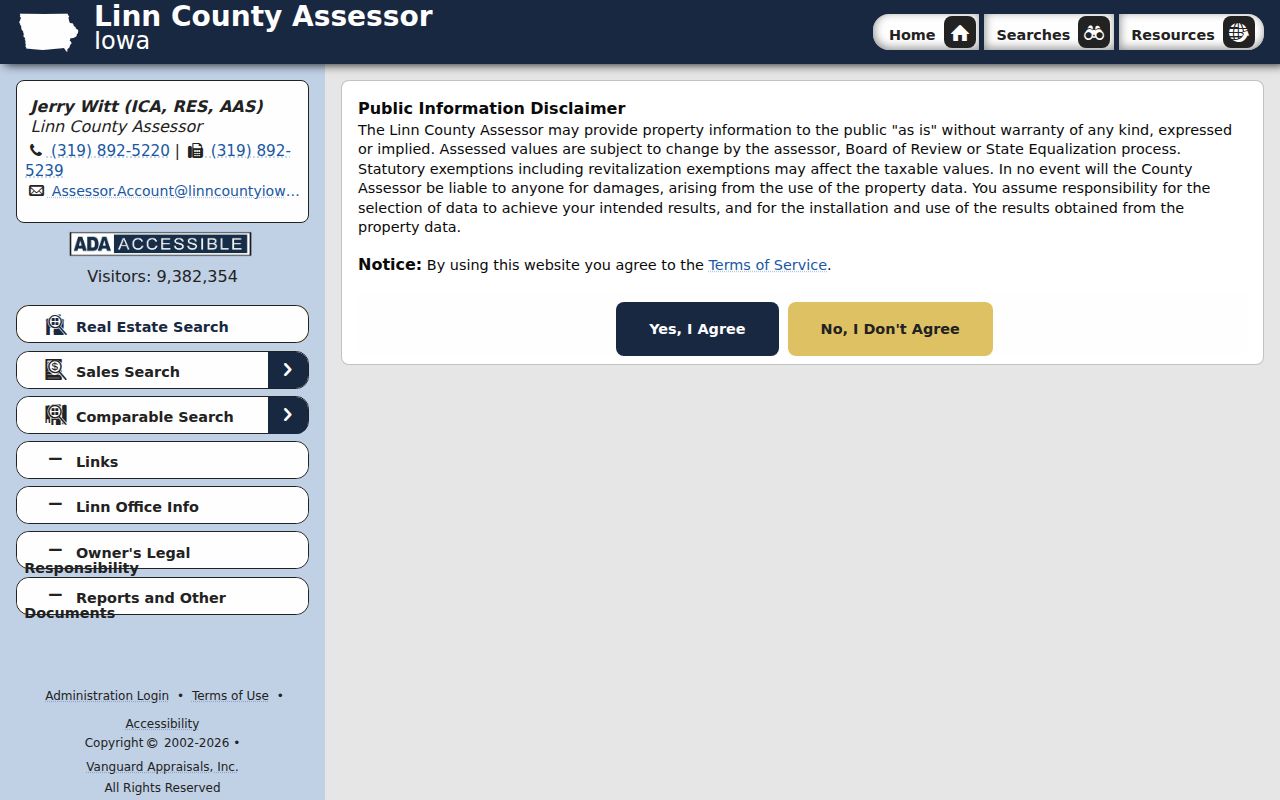
After finding the PIN, use GIS owner fields and recorder links. An assessor owner may live elsewhere, so the result is not proof of occupancy.
Linn County Voter Verification
The Iowa voter registration search asks for first name, last name, and ZIP. It verifies registration and polling-place details rather than publishing an open street roster. That makes it useful when a likely name and ZIP are already known, but weak for discovering every person at an address.
The official Iowa voter form shows the narrow search surface.
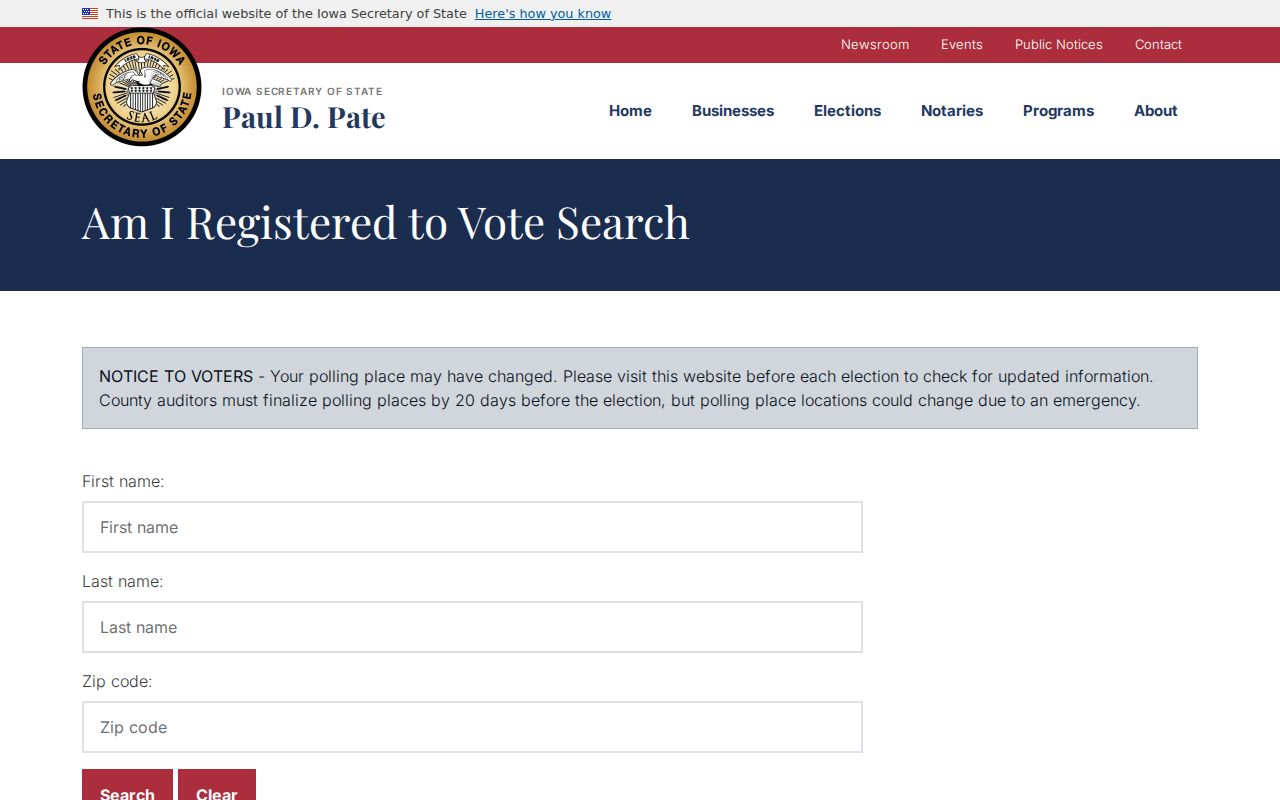
Linn County Elections also accepts a signed voter-list order form by mail, fax, or email. The requester must certify lawful use, choose fields and delivery options, and pay the stated charge. Protected identifiers are excluded, and Safe at Home participants receive confidentiality.
Note: A voter entry records registration status at a point in time; it does not prove that the person is present at the address today.
Linn County Deed Name Trail
The Recorder's Fidlar AVA index connects names to recorded interests. A person may appear as grantor, grantee, mortgagor, mortgagee, contract party, trustee, or attorney-in-fact. One owner field cannot cover all of those roles. Linn County describes real-estate transactions reaching into the 1850s, though the current portal's exact earliest indexed instrument was not exposed during research.
The official Recorder index capture identifies the county route.
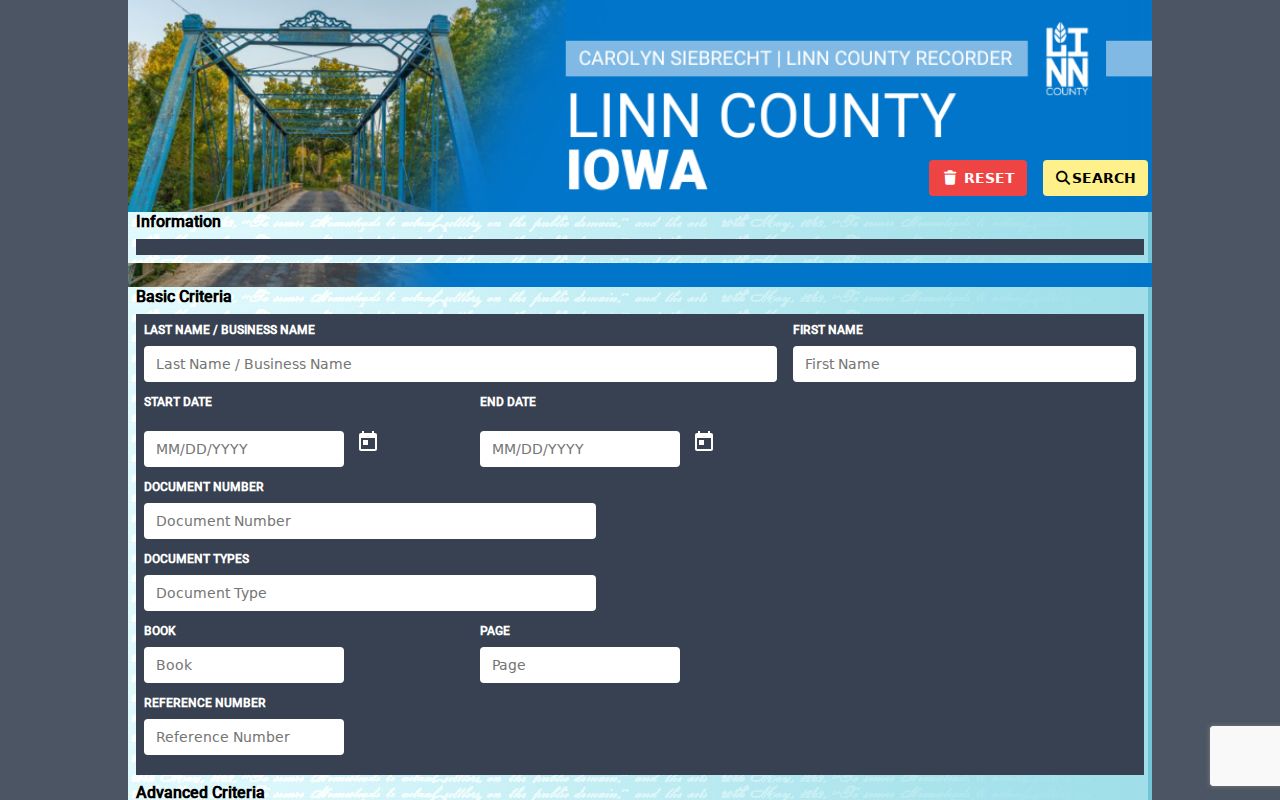
If AVA does not load, use Iowa Land Records, call 319-892-5420, visit the Recorder, or send a mail request with the party, date range, legal description, and instrument reference. Copies cost $1 per page, with a $5 document certification charge plus page fees. Confirm the schedule before ordering.
Current Linn County Directory Sources
Current resident rolls differ by purpose and access. A useful Linn County residents directory search begins by deciding whether the goal is a parcel owner, registered voter, court party, business role, or licensed professional. The record can confirm that role, but it should not be enlarged into a claim about the whole household.
| Source | Who It Lists | Keeper | Access |
|---|---|---|---|
| Assessment roll | Parcel owners | County or city assessor | Free portal and office |
| Voter verification | Matching registered voter | Iowa SOS and county Elections | Name and ZIP lookup; list request |
| Recorded-document index | Parties to deeds, liens, and contracts | Linn County Recorder | AVA, statewide fallback, counter |
| Court docket index | Public case parties | Iowa Judicial Branch | Free index; clerk terminal |
| Business and license searches | Agents, officers, and licensees | Iowa state offices | Free public searches |
Official records state their custodian and purpose. Commercial people-finder data may be broader, but it can merge stale addresses and same-name people without showing a clear source date. For one named person, the Linn County resident lookup gives the safer cross-check sequence.
| Source type | Best use | Main limit |
|---|---|---|
| Official Linn County or Iowa record | Confirm the exact public role, filing, parcel, registration, or case | Each custodian covers only its own record set |
| Commercial people-finder category | Possible lead that still needs an official check | May combine old addresses, unmatched names, and unclear source dates |
Lawful use. Use directory records for lawful personal research, civic transparency, family history, or fraud prevention. Never stalk, harass, threaten, or harm anyone.
Historical Linn County Directories
The Cedar Rapids History Archive carries city directories and phone books spanning 1876 through 2017 across 132,763 pages. The volumes can list a householder, spouse, occupation, business, telephone, and street address, while later criss-cross sections arrange entries by street and number. OCR helps locate a page, but the scan and directory year are the evidence.
The Downtown Cedar Rapids Public Library at 450 Fifth Avenue SE provides genealogy databases and local history access. The History Center at 800 2nd Avenue SE holds directories, clippings, maps, blueprints, photographs, oral histories, and files on people and businesses. State Historical Society and FamilySearch catalogs add county court, vital, census, and archival material. The Linn County city directory collections require a shelf-by-shelf check across editions.
- Roll
- An official list created for a stated duty, such as assessment or registration.
- Index
- A finding aid that points to a record but may not contain its full image.
- Parcel
- A mapped unit of land with its own identifier.
- Criss-cross directory
- A directory arranged by address so a researcher can work from street to name.