
Linn County Address History Sources
Linn County address history spans several record forms. The recorder supplies the legal title chain. Directories and released census schedules can name occupants. Sanborn maps date the form and use of Cedar Rapids buildings, while permits and current parcel data connect an old clue to a modern site. No source covers every year, so the era determines the best first stop.
| Source | Verified years | Where held | What it can show |
|---|---|---|---|
| Recorder real-estate records | Transactions reach the 1850s to present | Linn County Recorder, AVA, Iowa Land Records | Parties, instruments, dates, legal descriptions |
| Directories and phone books | 1876-2017 collection span | Cedar Rapids History Archive | Names by address, phone and business clues |
| Federal census | Released schedules through 1950 | NARA and library databases | Households in an enumeration area |
| Sanborn maps | 1884-1936 | Cedar Rapids History Archive | Footprint, number and building use |
| Historic inventories | 1993-2016 | Linn County inventories | Architectural context by map subsection |
For a recent chain, start with GIS and the recorder. For an early Cedar Rapids address, pair the legal description with a period directory and Sanborn sheet. Rural land before modern numbering often needs an atlas, section-township-range clue, or county history. A current ZIP should never be projected onto an old record.
Start With a Linn County GPN
The county GIS parcel layer exposes the GPN, situs address, situs ZIP, legal description, owner deed or contract field, and recorder instrument link. Cedar Rapids is assessed by its city assessor; other Linn County parcels use the county assessor. This split must be resolved before a deed trail begins.
Save the legal description exactly. It often survives a changed house number or street name. Keep the owner field separate from occupancy. A trust, estate, company, spouse, or contract party may appear, and a mailing address may be outside Linn County.
Note: The county assessor form has no visible owner-name field, so use an address or PIN before following the name elsewhere.
Trace Linn County Past Owners
The Linn County Recorder states that real-estate transactions reach into the 1850s, but the inspected pages do not publish one exact online cutoff. Begin with the current parcel, open its recorder instrument, and follow each predecessor reference. When AVA does not expose the needed image, use Iowa Land Records, then contact the recorder for a book, page, microfilm, counter, mail, or drop-box route.
- Find the GPN, current owner role, and legal description in assessor or GIS data.
- Open the recorder instrument number and note document type, recording date, grantor, grantee, and prior reference.
- Search the seller as a grantee in earlier years, allowing for initials, spouses, trusts, estates, and spelling variants.
- Match the legal description before accepting a same-name result, then repeat to the desired era.
- Ask the recorder for book, page, counter, or microfilm help when the web trail ends.
- Grantor and grantee
- The party giving an interest and the party receiving it.
- Chain of title
- The linked series of recorded transfers for the same land.
- Legal description
- The formal land description that can remain stable when a street number changes.
A deed is not always a sale. Mortgages, releases, easements, affidavits, contracts, estate instruments, and transfer-on-death documents may appear in the same index. The recorder does not hold property abstracts.
The successful capture comes from Iowa Land Records, the free statewide fallback for all 99 counties.
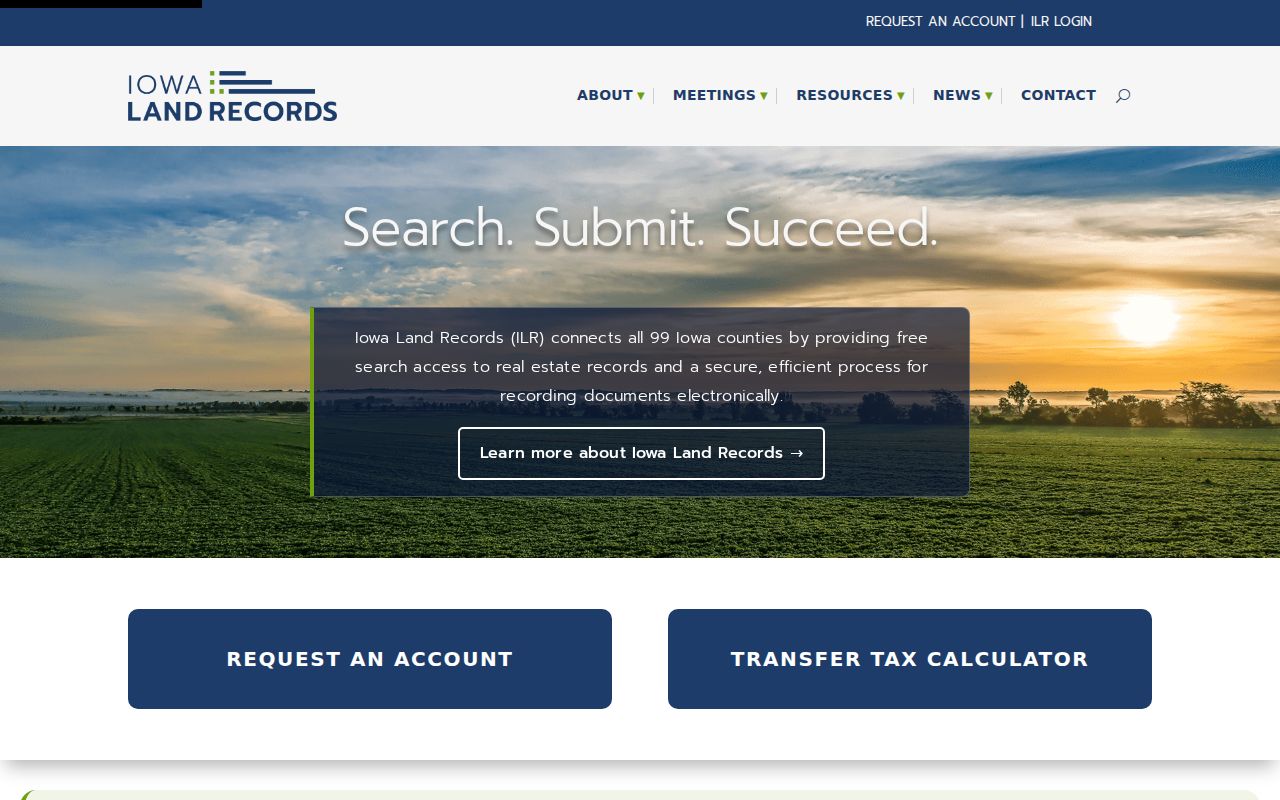
The statewide route helps bridge a portal gap, but it does not guarantee that every old scan is online.
Linn County Street Names Shift
Cedar Rapids uses 1st Avenue and the Cedar River as practical quadrant baselines. Missing NE, NW, SE, or SW can point to a different address. The city's current address framework dates to a 1972 ordinance, and a modern quadrant should not be forced onto an 1880 or 1910 entry.
Street-name changes create a useful loop. After city action, the ordinance is filed with the Linn County Recorder, Auditor, and Assessor. Official proceedings document a 2023 Ellis Boulevard NW proposal and a 2025 16th Avenue SE to 5th Street SE trail. Search both names, then connect them through the ordinance, address certificate, GIS, and legal description.
Sanborn Maps Date Cedar Rapids
The Cedar Rapids History Archive holds 197 Sanborn map pages spanning 1884 through 1936. They can show a building footprint, street number, block layout, and business use at a given map date. They do not cover all rural Linn County addresses and do not name every household.
Compare the nearest map year with the directory entry and deed. If a number disappears, inspect the footprint and nearby cross streets before deciding that the past residents moved. County Historic Preservation Commission inventories add architectural context through map subsections completed from 1993 through 2016.
Local Linn County House Help
The History Center Library holds directories, maps, blueprints, photos, clippings, local people and business files, oral histories, and school annuals. A reader may research with staff help or hire a knowledgeable researcher. A good request gives the address, city, rough years, known names, and the kind of result sought. No public fee schedule for custom work was found.
The Linn County historic inventories provide another page-specific route.
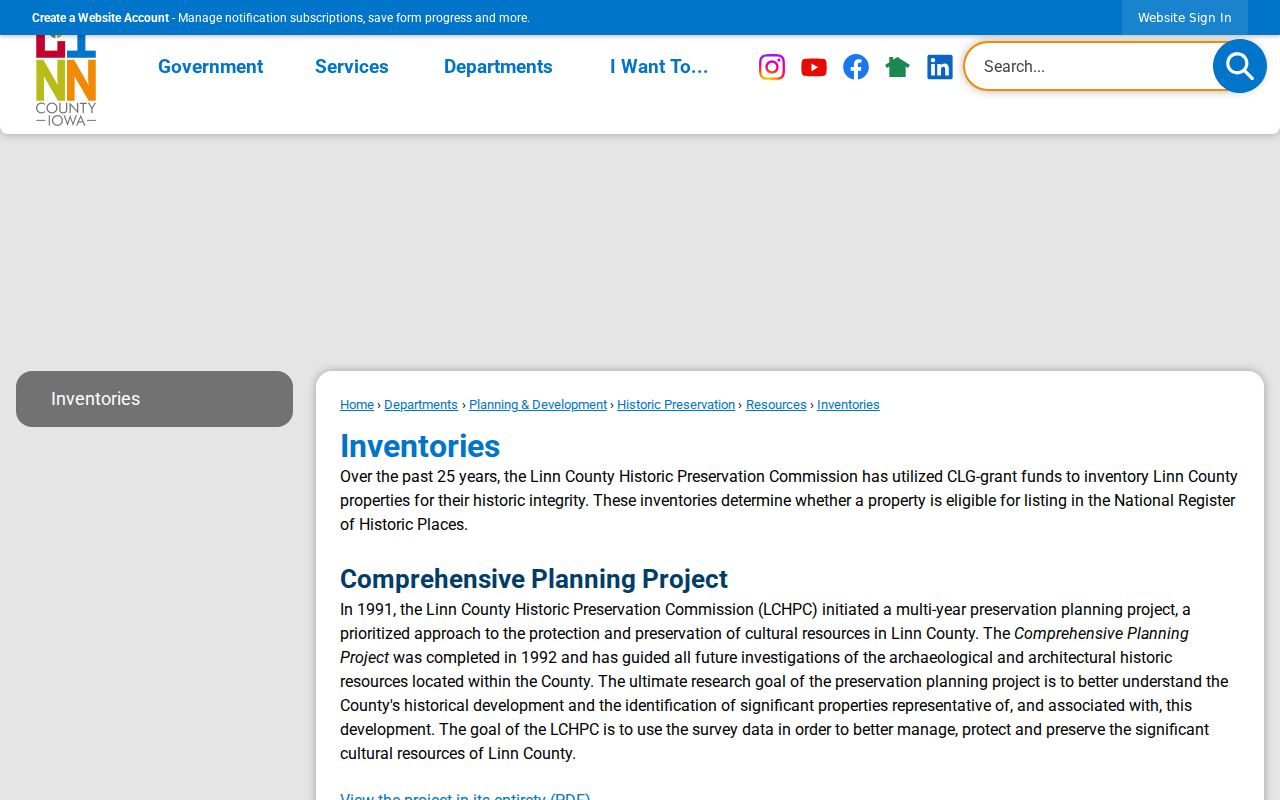
The subsection-based surveys can place one structure in a wider architectural setting without claiming who occupied it.
Linn County Archives Fill Gaps
The Iowa State Archives organizes government records by record group and usually requires research-center access. County records, maps, census material, newspapers, vital records, manuscripts, and photos may extend a trail that stops online. Storage work in 2026 temporarily limits some retrieval, so contact staff and request non-open-stack material at least five business days before a visit.
The archive capture shows the official access route for older Linn County records.
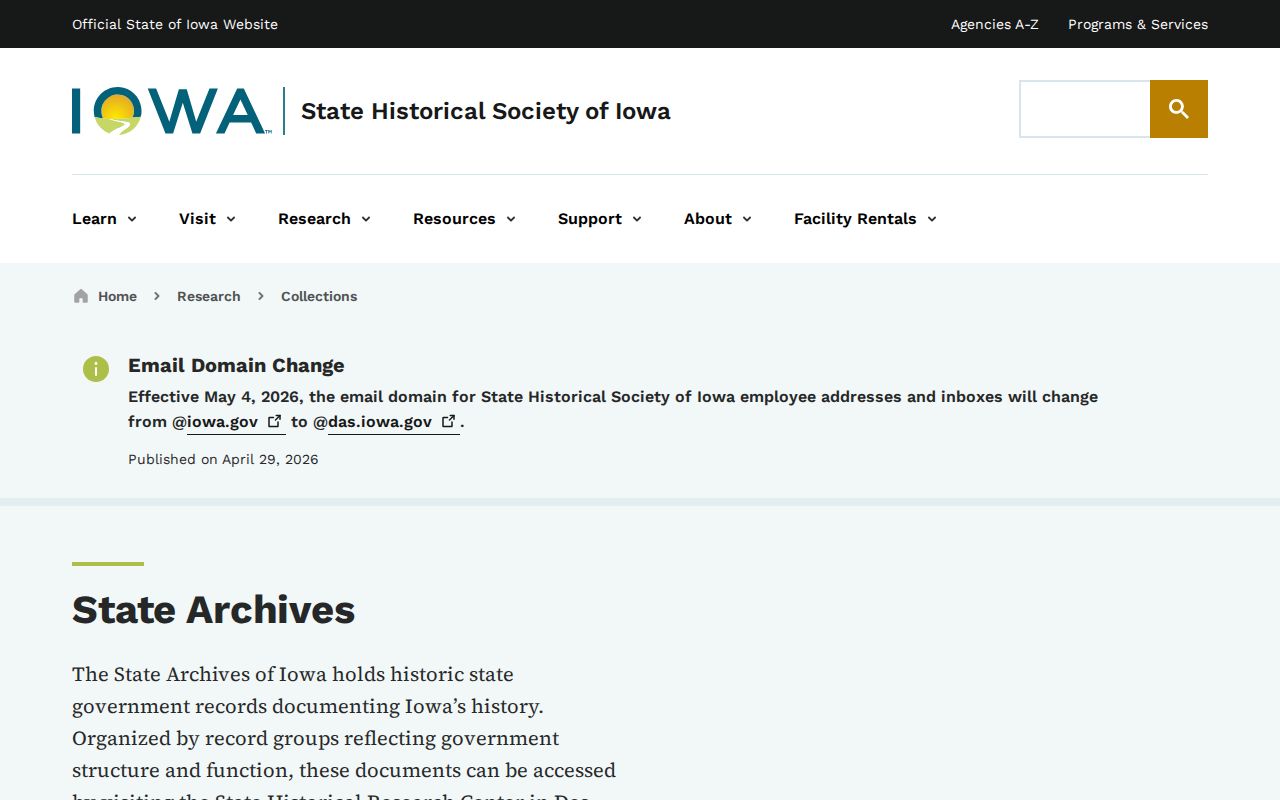
A request should name the former custodian, year, book, record series, or legal description and ask whether an alternate copy survives.
FamilySearch Adds Linn County Names
The FamilySearch Linn County catalog lists probate files from 1840 to 1924, a probate index through 1944, naturalization from 1856 to 1924, and several birth, death, marriage, divorce, and name-change series. Search fields can include first and last names, place, year range, spouse or parent, event, keyword, film number, and an exact-match control.
The successful catalog image identifies the Linn County collection route.
A catalog record proves that a series exists, not that every image is open. Sign-in, affiliate access, contract terms, or privacy rules may apply.
The 2008 Linn County Record Gap
The Cedar River flood displaced county and city operations and forced evacuation of the Linn County jail. The Northern District of Iowa says some Cedar Rapids courthouse records called Flood Files were destroyed. That documented loss can explain an absent federal file, but it is not proof that every missing Linn County record vanished.
Check the Northern District courthouse records notice before ending a search near that event.
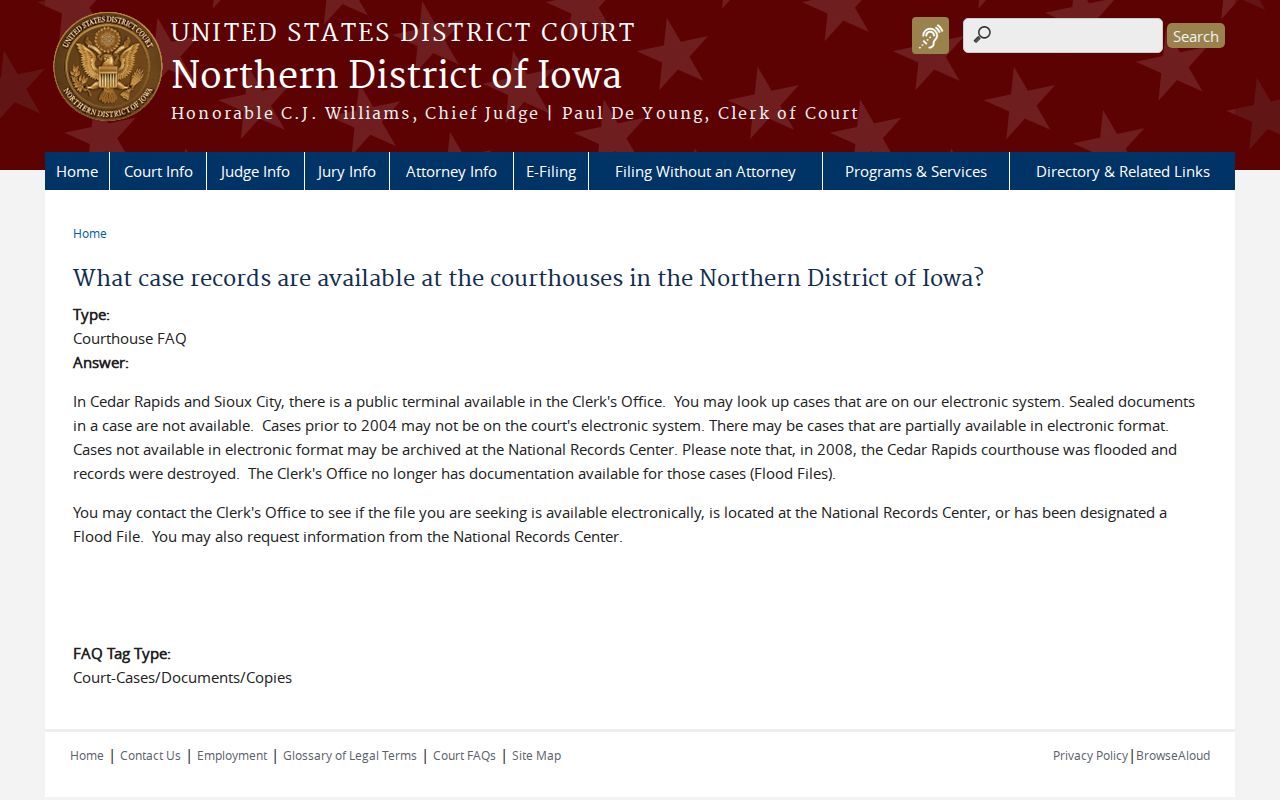
Ask the clerk or National Records Center about surviving copies, and use local directories, deeds, newspapers, or archives as independent alternatives.
Linn County Past Household Trail
Owners are only one layer. The Cedar Rapids directories and phone books span 1876 through 2017 and contain 132,763 pages, though that does not mean every year is present. Address or street sections can identify past residents, including people who did not own the parcel. The full collection is covered on the Linn County city directories page.
- Choose the directory year closest to a deed, permit, obituary, or known event.
- Use the street section when the occupant's name is unknown, then check the alphabetic entry.
- Record the exact number, quadrant, name, phone, and business or occupation label.
- Check the years before and after for a move, death, or change in use.
- Pair the address with the nearest released federal census through 1950, using NARA's 72-year rule.
Newspapers can supply obituaries, social notices, and address changes. FamilySearch catalogs Linn probate through 1924 and an index through 1944, plus other court and vital series. These sources can identify previous residents after the deed has supplied the address and likely surname. Catalog access may require an account or affiliate library, and privacy or contract rules can limit images.
Lawful use. Research past residents for house history, family history, and personal curiosity. Never use an old address trail to harass or track a living person.